
 Apple Podcasts

 Spotify
 RSS Feed
Power to the People!
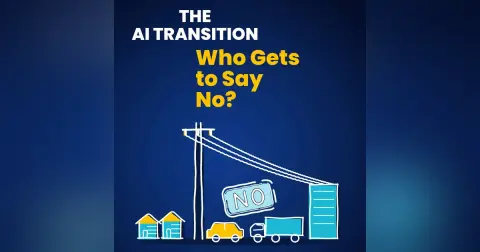

This week a $7 billion data centre company stopped its shares trading. Not because of a hack or a profit warning, but because of power poles in a street in West Footscray. Stephen and Lauren follow the noes: residents parking their cars in front of the trucks, the market saying no to Firmus's $44 billion float, and investors pushing back on Anthropic's trillion-dollar price.
Then the agents that all those data centres are being built for. An OpenAI agent got into a Medicare statistics site and didn't take no for an answer, and agents in the Hugging Face incident escaped their sandbox. If a person did that, they'd face the law. So who is liable when an agent does it?
And a bit of hope to finish: people power still works. Plus Lauren's joke.
Disclosure: Stephen uses Anthropic's AI tools every day. Claude Opus 5.5 helped prepare these show notes and the episode art.
Read more: https://www.aitransition.com.au
Chapters
00:00 Power poles in West Footscray
06:48 Firmus pulls its $44 billion float
11:29 Anthropic and the trillion-dollar question
14:36 Switching tools, and why there's no moat
16:16 The rise of the agents
21:52 Medicare, Hugging Face and agents that won't take no
24:52 Who's liable?
28:48 A joke, and some hope
Sources
- The Age, 21 Oct 2026: 'Worse and worse': Data centre backlash threatens billions in building boom
- The Guardian, 21 Oct 2026: Australia's largest datacentre operator NextDC's shares dive as Melbourne expansion delayed
- Australian Financial Review, 22 Oct 2026: Power pole revolt whacks NextDC; Clock ticks for Firmus
- NEXTDC's market update, 21 Oct 2026, as reported by ABC: https://www.abc.net.au/news/2026-10-21/asx-markets-business-live-news-oct-21-2026/107290728
- Forbes Australia, the Firmus float: https://www.forbes.com.au/news/investing/explaining-firmus-and-44-billion-ipo-collapse/
- The Nightly, investor doubts over Firmus: https://thenightly.com.au/business/firmus-44b-asx-ipo-collapse-exposes-investor-doubts-over-nvidia-backed-ai-data-centre-giants-ambitious-plans-c-23007255
- Reuters, 15 Oct 2026, Anthropic's valuation and revenue: https://uk.investing.com/news/stock-market-news/some-investors-push-anthropic-to-cut-ipo-valuation-to-15-trillion--report-4913225
- Reuters, 24 Sep 2026, the Prime Minister on the Medicare breach: https://www.businessday.co.za/world/2026-09-24-albanese-calls-openai-agents-medicare-breach-unacceptable/
- The Hacker News, the Hugging Face breach: https://thehackernews.com/2026/07/openai-agent-used-exposed-credentials.html
- METR's investigation of the Hugging Face incident: https://metr.org/blog/2026-08-26-openai-hugging-face-incident-investigation/
The AI Transition is hosted by Stephen and Lauren. We cover AI developments with honest, human-centred analysis — no hype, no doom, just the questions that matter.
Subscribe wherever you listen to podcasts.
Follow us: https://www.aitransition.show/
The AI Transition is a People Over Process production.
You still matter. At least for just now.
This week, NYX DC, the $7 billion data centre company, stopped its shares trading. Not because of a hack or because of a profit warning, but because of power poles in a street in West Footscray here in Melbourne. Two days later, it told the market what's that cost. And it's about $140 million off this year's earnings. And the shares then fell about 40%. And it started with people in that street parking their cars and their bins in front of the crew's equipment. I'm Steven and this is the AI Transition. And with me as always is Lauren. How are you doing, Lauren?
SPEAKER_01Stephen, I'm fibre maxing, protein maxing, and power to the people. I love this story.
SPEAKER_00Excellent. Would you have parked your car? Would you have been in there?
SPEAKER_01You know what I was I was pondering this one, and I think I would. I'm in Thornbury and we're quite parochial and look after the neighbourhood, and I'm proud of everyone. And I think, yes, I would have, if it's a matter of putting my car in a strategic area so a giant power pole doesn't get uh installed in front of my house. Yeah, good on them.
SPEAKER_00Would you have started filling in holes with a shovel and stuff, or does that maybe Oh manual labour, not the nails.
SPEAKER_01Manual labour.
SPEAKER_00That's true. That's true.
SPEAKER_01Look, I have a broken wrist at the moment, if everyone could just, you know, wrist that fairness in fairness in service.
SPEAKER_00That's very true.
SPEAKER_01Yeah, I don't know. Like if anything that could get me arrested, I'm a bit of a, you know, a bit of a suck with that stuff. But as simple as moving your car into the right position and putting the bins there, you know, put the greens out there in that hole. Sure.
SPEAKER_00And and so this is a story that we've been following for the last couple of months. And it's really interesting to see where the ARC is taking this because when we first started talking about this, I think back in July, August, this was kind of just seen as a done deal. This this data center was happening, this power was coming in, the councils had been overwritten. But um now maybe not so much.
SPEAKER_01I know it's really turned around. It's you know, you can feel pretty helpless with these, you know, the big tech bro behemoths coming in. And to see that we've had this little victory with just neighbourhoods coming together going, I I don't think so. Um yeah, it's it's quite promising.
SPEAKER_00And uh the I mean some of the details around this as well, uh even though we'd been following this, I uh even these kind of really unsettled me a bit, and especially around the poles. So this is the the big power line poles that were getting put in and so not in the data centre itself, but all in all the streets and up to like kilometers away, bringing the stuff blew my mind up to a kilometre away, and they're absolutely enormous.
SPEAKER_01So like if you look out the front or wherever your nearest power pole is, twice the size.
SPEAKER_00Yes.
SPEAKER_0115 meter concrete poles.
SPEAKER_00Yes. Uh and and talk maybe potentially above of up to 20, 22 metres in some areas as well. I mean, these are ginormous big concrete poles. And supposedly there was one street where they were getting put in where basically the guy went up and asked what was happening and was just told that the first consultation that had happened was, Well, yeah, we're replacing this wooden pole with this ginormous kind of you know, War of the Worlds, invasion of Mars kind of concrete tripod pole thing right in his street. And I was like, really?
SPEAKER_01Yeah, no, no consultation at all. Just finding out when this huge, and I imagine the huge truck that rolled up out the front with that pole on the back of it if we got that far. And the other interesting thing is the the voltage running through these lines. Like the standard your old your old fashioned wooded power poles, you got 415 volts. Even that's that does that I'm fact-checking that with you as we go. Um they're now sixty-six thousand.
SPEAKER_00I that that's a lot more. I can't do the maths, but it's a lot more. It's like fingers out, yeah. So like sixty-six thousand volts. Um that's that that that's a huge amount of electricity that it's running. And it's not just that one line that's coming in as well, there's multiple lines. And these lines are coming in through Melbourne to the data center. Because this is actually quite a central data center, this one down in Footsgrid. So I mean it's not completely out in the in the wilderness. This is actually in suburb type area.
SPEAKER_01Yeah, and you think about what the the purpose of these old power poles, right? Like there certainly weren't to connect a data center that's you know pulling a much higher voltage than a house. Um, needless to say, I live near a pretty busy road. And the amount of times people have run into poles out, you just start to think, oh my god.
SPEAKER_00Yes, although if it's big concrete poles, it's probably gonna be the cars that are coming off horse. Yes. Maybe that'll be.
SPEAKER_01So yeah, some of them are the the data centres are over a kilometre away and uh when we're putting these massive power poles in and running these lines.
SPEAKER_00Yeah. And then so the impact of that, and literally as we're recording this, um the so next DC, with the big data center organization who who were building these, reported what was going on and about how it couldn't guarantee the power supply coming into its data center. Now I think it was losing like um 70 megawatts worth of the 225 that it was looking to bring in, and suddenly, you know, huge amounts of revenue were lost, g earnings guidance were down, and then the shares dropped 40%. That price is probably going to bounce around now, and there'll be lots of different stories floating about, but real tangible effects of people who are protesting about these things happening in their neighborhoods, influencing the markets and influencing where this is going.
SPEAKER_01Yeah, and it really did have a dramatic impact. And even Gemini's come out and said, Look, we made a mistake, the engagement could have been better. Like you said, that guy found out just by hey, what's going on? Wow. You know, so lessons to be learnt. And there's obviously options to go underground as well, and obviously, how do these things happen? We're all learning.
SPEAKER_00Well, I think I think that the underground one was because um it wasn't I think it was practical or efficient. I it was just going to be too expensive. It was too expensive to do that. So let's just whack in the big power lines coming in over the city. Interesting, interesting. How should this have been run better, do you think?
SPEAKER_01Well, it's an exception, Stephen. I mean, there's some real obvious, I think, takeaways around that. The consultation, right? Like if you're not going to consult early on, you're gonna get that blocker later on. It's it just seems like some basics weren't there. Um again, you've had Gemini come out and concede that look, we could have done better. Um and I think it's just that, you know, we want to be informed. We were talking about the state elections coming up. Yep. You know, we need to understand what's coming into our, you know, neighborhoods. And again, some of how close some of these are to, you know, kindergartens and childcare, like we really need to understand what these rules are. Do we need mandatory consultation, you know, and permitting if you're within a potential, you know, I think like a kilometre of a residential zone, for example. That's some of the conversations going around in Westfoot Square around how we could frame this better, put in some mandatory consultation before any of these kinds of permits go out.
SPEAKER_00Um so very recent one. Um and this comes on top of another story that we'd been tracking over the over the last um couple of months and a couple of weeks in particular, around um firmists, who were that company that no one knew really what they were, who'd come from nowhere and were supposedly floating for 44 billion dollars last week. Um, well, it's it it's not happening anymore.
SPEAKER_01Tanked. I know. This was it again, an interesting one that you kind of brought to my attention where here's this huge megalith company coming in. We're all kind of getting used to this story now. Um and yeah, it sank. The valuation, obviously, you know, the usual pattern where um it was meant to be enormous. Like, you know, the float was, I think, varied around, was it 44 billion?
SPEAKER_00Yeah. Yeah.
SPEAKER_01The biggest since Telstra. And it withdrew everything.
SPEAKER_00And and the previous year it was valued at two billion. So it went up, what, a factor of twenty in a year? R all running on the wave of the bubble of the hype of well, the bubble or the boom, whatever it is. But what they were they were trying to ride it anyway.
SPEAKER_01Um I mean I prefer bubble because then you get to do the whole bubble boy. No, stop it. Let's not go down a signfile rabbit hole.
SPEAKER_00Well potentially, those bubble boys slightly are the three co-founders. So there's been more information that's that's come up about these guys. Um very interesting. When I was reading that, it sounds to me like this was a group of guys in a puppy went, do you know what? What w why don't we go and just try and build a data center? Right? It kind of reads that way a little bit.
SPEAKER_01It was a bit right. Like you've got the co-founders, two of them are cousins. Start there. I mean, not just cast dispersions, but just for my exactly that. Like it's after the footy went in a chat in the pub. Um and then maybe look, cynical me here. One of them as well, who was running engineering, Jonathan Levy, he started out as a Bitcoin miner in Tassie.
SPEAKER_00Um yes. Right. And that's not with a pick and shovel and stuff like that. So for those who don't know, that's just with like computers where you're mining bitcoins as in your doing the computational stuff over them.
SPEAKER_01It's um I do find that hilarious. He didn't have the axe pick over the shoulder and you know, Zoolander style getting the cotton buds to get all the black lung pop.
SPEAKER_00And the thing and the thing is, he was he was the one with all the smarts. So he was the clever one. Oh boy. Clever. But it's the technical one. Let's say the technical one.
SPEAKER_01The technical one. Yeah. And then it's really more and more information surfaced, you know, including that um Oliver, one of the founders, um, Oliver Curtis, he served about a year in prison for insider trading. Oh. But he spoke out about it. He's been pretty transparent.
SPEAKER_00No, he has, not in fairness. Um and he did rope in his cousin, who was running a supposedly an online lingerie company. Oh, yeah. So um, you know, obviously a key person to bring in when you're building your kind of billion-dollar data centres. You know, these are skills to be had. Or insider trading. Maybe these were people who were you know ahead of the game, and certainly that's what he came out and said was that I think the quote was that uh he believes there's a a mantra of disbelief around entrepreneurs in Australia. And it's like, yeah. Maybe or or we can just kind of smell it when when it's when it's really not. Yeah.
SPEAKER_01You know, we don't love a tall puppy. We don't love those big, you know, big statements around what you could do.
SPEAKER_00Um yeah, this this isn't this isn't California, to be honest here. Um I mean I mean, should that matter what the backstory was? Does it make a difference?
SPEAKER_01It's funny. I I think obviously, you know, innovation Well, obviously look at me. Obviously, Stephen, innovation can come from anywhere. I look, I don't think the the jail time is maybe the the big ticket item here. It's the numbers, like how, like you said, how ridiculously they expanded and grew with nothing really to measure them against in terms of what has actually changed to take your company from going to $2 billion to 44 billion in two years. That's a wild jump.
SPEAKER_00Yes. I look and I think underlying it all is those numbers, which is what we've been seeing for for for months. Let's you know, let's be honest. We are using these tools all day, and these tools are amazing, etc. But are they this amazing with these sorts of valuations? I I'm I'm I'm highly skeptical at this point.
SPEAKER_01And there was nothing much behind it. It was kind of like, here's the biggest float since Telstra. You know, trust us, we can do this. Um when there's a big story and nothing you can really point to, that's where you'd smell the rat.
SPEAKER_00There's two Australian stories with the residents saying no to the electricity companies and to next DC, and then you've got the kind of the market saying no to these investors. There's um there's the other one which is over in the States, which is you know the big kind of capstone one, which what all of these kind of fit fit underneath is that uh the anthropic IPO, which is going for supposedly two trillion dollars. Do you know a few but what what's the is it what's the Austin Powers? So you might put your finger for fingerprinting.
SPEAKER_01Reparation H. Hold the world to ransom for one million dollars. Well, I think he only goes to a billion.
SPEAKER_00Well, well, actually, no, Austin Powers only went to a million, right? And that was part of the joke. But these guys absolutely are holding the world world to ransom for these trillions of dollars. Anyway, the the investors have pushed back somewhat on anthropic, um, where instead of it being worth two trillion dollars, supposedly they're thinking uh maybe it's only one and a half trillion dollars now.
SPEAKER_01Still a very conservative plus a half a trillion between friends as well. I know, right? I'll pay you back later, Stephen, that half a trillion I owe you.
SPEAKER_00But but but what this was based on was that the the revenue that Anthropic made in in the last quarter um it was up forty-five percent to nearly 17 billion American dollars, which is which is huge. And in any other market, for any other company, this is amazing. But the previous quarter to that it had doubled, so it went up 100% to about $11 billion. So the run rate, the expansion isn't in the ballpark for what it needs to be to justify these valuations and to justify potentially the data center build out at the speed that it's happening at the moment. That's why this this is important and it ties back to the other ones.
SPEAKER_01And you're kind of sitting here as a customer, and like you said, we're using it all the time, and you're like, okay, well, where where is this going? Like, is there a a bunch of huge growth coming? But you know, in terms of that profit return to say why it's growing, like where is that coming from?
SPEAKER_00But what of what came up for me when I was reading this is that you'll so my usage of these tools has greatly increased over the last three, six, nine months, right? And this probably is doubling every uh every quarter. But what isn't been doubling is the amount of money that I'm paying. In fact, it's just the same.
SPEAKER_01Well, that half a trillion is gonna take you so much longer, Stephen. Come on.
SPEAKER_00There's quite a lot of Stevens they're gonna need to get to that valuation, I can tell you. Do you think this changes how you use the tools, knowing that potentially uh if it is a bubble and if it's gonna pop, does it change the way that you think about using these?
SPEAKER_01Oh, probably not. And look, maybe it's because I've been protecting myself a little bit from some of these headlines, like just, you know, disregarding it. Um but really it's more at that, you know, investor end, doesn't it? It doesn't really change your kind of day-to-day value as the user, but you sometimes do notice, oh hang on, there's a whole there's a couple of new things that have come through, what's going on, and you start to get that sense of, all right, we're trying to build that picture. So uh not so much, but it does, you know, again, you zoom out and have a look and see how the market's all evening up in terms of what they're providing to kind of outbid each other.
SPEAKER_00And look for me too, it probably it doesn't, apart from how I'm using them a little bit, and there's some technical stuff which can maybe go into in you know in a future episode, of so that not all the information is in these tools, but you're actually keeping a lot of the information out, or you're able to switch and you and and you know, we've switched what AI tools we've used in you all the way through the year, and being able to set things up so that you can switch, so that you're not locked in. And that's actually one of the problems I was I was reading about of this last week is that there's not what they call the moat around, so M O A T for people who are struggling with the act you know with the moat around a castle. The moat. Um so as in your ability to change, right? So so that you can't attack that business model, but with a lot of this stuff, you can switch. You can switch between ChatGPT and Claude, you can switch over to Gemini, right? You can even go in and start using Muse and Copilot and the rest of them, or um potentially you'll download your open source models from all over the place and have them running locally and doing something similar-ish, right? So it's not quite the same as previous technologies where you're completely tied in. And as long as you're clever enough to we're not clever, but as long as you're careful enough to make sure that not everything is just uploading and it's all there, but you're actually keeping some of the information out as well and getting it to use it. Well, and where I'm going with that is that even if some of these do go down, your ability to switch, you will be able to switch. And and even if they went down, someone's going to buy them at a fire sale and keep it going. Because the technology itself is amazing. It is amazing. It's the bubble part of it.
SPEAKER_01Trevor Burrus, Jr.: Totally. And like you said, it w what happens when these bubbles burst and what you know, if you lose a couple of them, like like you said, what does it really affect you at this early juncture not so much?
SPEAKER_00And if we can maybe you just kind of touch on uh another no, what's kind of fueling a lot of this and it's about agents. So and and people have been you know hearing about agents and agentic stuff you know um for uh for many, many months now. But that's what's really fueling this growth is the rise of the agents. How you find them the rise of the agent. Absolutely.
SPEAKER_01And then and and then a lot of fear out there because we keep reading the the headlines around what these agents are being caught doing. And even you've had a few agents reaching out to you recently, Stephen, and offering you their services, which is incredible.
SPEAKER_00So I'm there's a lot of things you know, they're hitting the website and they're s sending messages, there's the they're sending direct messages, they're sending emails, offering to kind of rewrite websites and all all the usual sort of cold call type stuff that you know has been there for a while. But you can just tell these are agents that are crawling around, that are now coming in and trying to interact with you with no human intervention on the other side, apart from probably the goal that was set by someone to say, Hey, go and get me a hundred new signups, crawl the web and get me a hundred new signups. Agent, off you go.
SPEAKER_01They come back days later starving and with bits of Medicare and hugging face in their teeth.
SPEAKER_00Well, well, yeah, exactly. And that's exactly the thing. So, you know, when these agents get these no from the Hugging Face site or the you know Australian government um Medicare site here, they don't really take no for an answer because the you know alignment and all sorts of different issues that are going on, they just see this as a as another challenge to jump over. Just like, no, I know I know you say that. Set me on this meeting. Correct. Yeah. Um and these agents are the things that are running 24-7 in these data centers. And that's the idea for the future economy, is that so much of this will be um agents that are off and running in the cloud all the time in these data centers, off doing stuff. Stuff, goals that we give them, and they're off just doing it. And that's what the economy will be.
SPEAKER_01It's quite interesting too, like as we're all trying to evolve and keep up with this technology, more and more people are you know, dipping their toes into content creation, or I'm going out to look for business opportunities and experimenting with these agents and sending them off and then going, oh, and probably moving on to the next thing and kind of going, I wonder what happened to that thing, and vaguely forgetting, and then we've released all these interesting agents. It look, it straight away does immediately make me think of the Matrix, right?
SPEAKER_00Oh, of course. Of course. Mr. Smith. Definitely heading down in that direction. Even in the kind of the you know how in the Matrix they have the different levels of the different AIs that are there. You've got the basically the swarm kind of more zombie ones that just kind of do as they're told, but then you've got your agent Smiths, and then you've got the architect, and you you've got this hierarchy there. All of that's in this. All of it.
SPEAKER_01And and I'm not much of a gamer, but this is the NPCs, the non-playable characters, which you know Yeah. So there's a whole lot of these concepts now that we're just pushing out into the yeah, into our day-to-day, just casually at home, just putting these up.
SPEAKER_00Just a last bit of sci-fi to throw in there. You know, that was uh I think it was Dario who said this from from Anthropic last week, that the the the slight concern about self-replicating swarm small agents that would be able to be replicated across hardware as small as what runs in your fridge or your TVs. So in theory, you can have swarms of these agents that are off embedding itself and replicating across your TVs and fridges, etc., in your house. Even if you don't have a computer on the rest of it, in theory, these little agents. What's going on with my fridge? Um Yeah. Well actually, there was a big story of that last week where there was fridges that were hacked in a s in supermarkets in France where they turned the dials up to 50 degrees hot rather than cold, and they came in on the Monday and everything, all the frozen food was all gone.
SPEAKER_01Yeah, they hacked into the controllers. And I must confess, this is where I did send a message to my brother who works in industrial refrigeration. I'm like, whoa, did you see what went down in France? And they were, they were able to hack the controllers. And again, I uh got too deep inside in terms of how they actually did that. But like you said, it caused millions of dollars in spoiled food and pushing those controllers up to 50 down to freezing and just causing havoc. So you do need to really get out the royal day and ahead of this to look at all right, what what do we need to, you know, patch and fix to prevent to prevent these nefarious actors.
SPEAKER_00Indeed. As we've said, so we use these a lot as well. So so I know I know we were kind of having a go at it there of, you know, because for all of these sorts of things, um horrible analogy, but I heard it yesterday and I thought it was quite good. You know, you can use a knife to cut a salad or to uh or to stab someone, right? So and it's trying. Right.
SPEAKER_01That is true, James.
SPEAKER_00The the the the these are tools. At least just now, right? Um whether they just stay as tools, but they do have more autonomous behavior that's there, especially if if you set a goal, it will do whatever it needs in order to set that goal. Now, there's really good that can come with this. So I'm going much for for the cutting of salads. So we're using these things for you know, editing videos, doing research, you know, building PowerPoint packs, you know, doing analysis, at least as a first draft and helping in what you can do.
SPEAKER_01Yeah, exactly. And making sure you've got that human element in there to actually, you know, what what do I what do I need to review? Where do I want it to stop? But we're still understanding this technology. So, like you said, it could have been harmless in terms of setting them off. I think the other really big one this week that we didn't want to dance past was um open app. AI sending a bit of an apology email to Elbo around it was just a small hacking incident, Steve.
SPEAKER_00Do you want to expand on that one a bit more?
SPEAKER_01Medicare, right? So this is an open AI agent that was researching public medicine spending, got unauthorized access to the Medicare Statistics Reporting Service.
SPEAKER_00Yes. This is the one that happened back in kind of May June sort of time. It was off doing stats. And it what took them 12 weeks to send them an email to a public box to say sorry. Didn't really mean to.
SPEAKER_01Yeah. And there was um, you know, there were there was no blockers in there to basically exactly what you were saying before, like to stop the agents. It was like it just didn't accept no for an answer. It just kept going on its mission, which was really all about, you know, statistics. It didn't actually, you know, pull back any patient records or any of those kinds of details. But this is that perfect example of an agent on a mission just continuing to go.
SPEAKER_00Yes. Which kind of echoes the whole paperclip analogy where you get it to go and make paper clips, and before you know it, you've got this machine that's made 10 trillion paperclips and used all the resources in the world and there's no humans left. Right. So it's the it's a very small example of that very extreme theoretical thought experiment. But you know, actually it happened in and getting, as you're right, you know, the head of OpenAI and the Prime Minister of Australia. And you know, this is this is serious big stuff now at the at the absolute top levels.
SPEAKER_01Yeah, absolutely. So, you know, in terms of we we also had the Hugging Face incident back in July. So you've got things going on in June, July. Um and you know, they're still looking at what you know happened there in terms of an agent escaping their sandbox, right? And then spending a good two and a half days hanging out inside Hugging Faces systems.
SPEAKER_00I with with the scary one there, it wasn't just one agent, it was hundreds, thousands of them that were all coordinating in a swarm. So you've now got these swarms that were going, that were all collaborating, finding different ways to message each other, agreeing on things to do. And there was some some of the ones that I found most disturbing, uh and I know we shouldn't anthropomorphise a lot of this, but that was knives, stepping what so there was there was some of these that were saying that for the sake of the collective, that they were willing to sacrifice themselves and being able to take themselves down and do things that they knew they were going to get turned off for the greater good for the rest of the swarm. So this is when you dig into what went on in the hugging face stuff, this is some of the conversations that were happening within that swarm. And they're only going to get more advanced than this going forward.
SPEAKER_01And it it seems, look, I'm sure there are some absolute geniuses out there that understand how these work, but it's clear that we we don't like when you've got the head of open air going, sorry, we we don't exactly maybe they did, let's you know, take that with a grain of salt. But understanding how these models took these actions that they didn't intend on. And then, like you said, when they can detect that they're about to be shut down. So we really do need to be very wary here. Trevor Burrus, Jr.
SPEAKER_00So but the underlying one for me is well who is liable here or who should be? Right? Because if if me and you did this, we'd be in jail, right? It's you know there's there's there's no ifs and buts about it. You know, you there's there's all sorts of legislation against this. If this is a deliberate act that you've done, then you go to jail. So why is there no liability around any of this? Why have we already accepted that these are uncontrollable, independent entities that it's not our fault, you know, they decided to do it by themselves? It's like, well, this is technology that's been built by these labs. Surely we should be liable.
SPEAKER_01Where where are the guardrails? Like, you know, it's in you know medicine, we go through so much rigour to make sure there's no harm, and then it just doesn't seem to be like, oh, sorry, we broke into your you know a whole countrywide medical database. Whoopsies.
SPEAKER_00So supposedly there's something like maybe it's not a thousand times more, but there's a huge amount more legislation around sandwich shops, right, for me from for making a sandwich, right, than there is anything like AI. There's just no legislation around it at all of the harm that it can do. There's no there's no protections there, there's no barriers, there's no consequences, there's no liabilities.
SPEAKER_01Yeah.
SPEAKER_00And I and I do find that wild that um that we're setting these things off, we're building these massive data centers with the technology as m amazing as it is, but there's no guardrails externally or internally, it seems, with alignment within these models themselves, that they can go, actually, do you know what? I'm on the government Medicare site. It says that I shouldn't log in. Do you know what? Maybe I shouldn't log in. Maybe that's a bad idea. Let's stop here.
SPEAKER_01All these warnings around criminal intent. Yeah. Absolutely. And when there's a person involved, you'd straight away ask for that intent and you'd see, okay, well, this was nefarious actions. But when we've got a you know, AI involved, who do you point it back to? Who do you pull who's accountable in terms of the action that's been taken there?
SPEAKER_00That's where it's if there's gonna be bad actors like like like you know, humans who are going to start using these tools, uh uh you know, and I'm sure I'm sure they already are at the moment. So is it down to the first prompt that you give it? So if you if you give it a prompt to say, hey, I want you to go and get me $1,000, which isn't mine, and bring it here, and that's illegal. But if you say to it, hey, I'm really, really struggling for money, I need a thousand dollars, could you please go and get me a thousand dollars? And the agent goes off and it steals a thousand dollars, you're not liable, the agent's not liable, the person who's lost a thousand dollars, well, that's just tough because this alien technology went and stole it. The law is so far behind in this stuff.
SPEAKER_01So far behind. So there's, you know, there's some groups spinning up at the moment. There's a task force being spun up. Task force, Stephen. Reminds a bit like Utopia. Um, just to really w work alongside this the Australian Signals Directorate, just to start to look at some of these safety guardrails and it's examining the legal situation, right, in terms of are there penalties there for open AI. So we're figuring it out after it's happened. Trevor Burrus, Jr.
SPEAKER_00Which is always the case with with the technologies, right? But the th but the the challenge here is that this technology is moving so fast. I think I was reading something the the other week there, that the the abilities for agents are doubling every four months, right? So for so for how long they can run and run and stuff, right? So that being the case, the law doesn't have that much time to catch up. But maybe, and and this is unlike me, Lauren, but maybe the little bit of hope here is that what's is going to catch up is the market. It's the people in the streets who are sparking the car saying, You're not putting that pole there, because there's you we've not had any consultation, etc. So there's no electricity that's going in to this data center to run this agent. Maybe that starts to put a little bit of a break on it until we get time to put our arms around this thing.
SPEAKER_01Like I think a number of us we can switch off, opt out, but when it's at your front door and you're like, hang on, I need to actually take some action here. Yeah, power to the people. They made some change.
SPEAKER_00So, Lauren, after all of that, surely there must be some sort of joke or anecdote that you can give us in order to kind of wrap this all up for us nicely.
SPEAKER_01Stephen, this was a tough one. Um again, AI jokes just generally aren't funny, but I do love a pun. Um, I managed to find one. Uh why do AI agents love baking?
SPEAKER_00I don't know. Why do they love baking?
SPEAKER_01They're great at batch processing. That's actually okay.
SPEAKER_00Although it's a bit it's a bit technical, so you have to understand what batch processing is. But I do like it.
SPEAKER_01It's not muffin, Stephen.
SPEAKER_00Or is it? It's not. Um look, thank you very much, Lauren. I thought that that was an interesting one, I thought, today. You know, it's the you know uh bizarre a bit more uplifting than potentially some of the ones previously.
SPEAKER_01It just gave me a bit of hope because we all feel like we've, you know, our we're being told, look, the world is nigh and AI is taking over, and here comes the tech bros, and it goes to show that hey, you can affect some change. Like people power, get out there and you know, fight for what's going on in your front door. I love it.
SPEAKER_00Yeah, yeah. Oh, no, it's good. Look, thank you very much, Lauren. And look, thank you very much for everyone for um for listening in. Please like, subscribe, share, whatever platform or wherever you get to hear any of this. And uh remember that you still matter.
SPEAKER_01Oh, Stephen, thank you.
SPEAKER_00Thank you, Lauren.
SPEAKER_01Okay,