


 Apple Podcasts
 Spotify
  RSS Feed
 cout, Strike, Repeat: Why Five Is the Magic Team Number
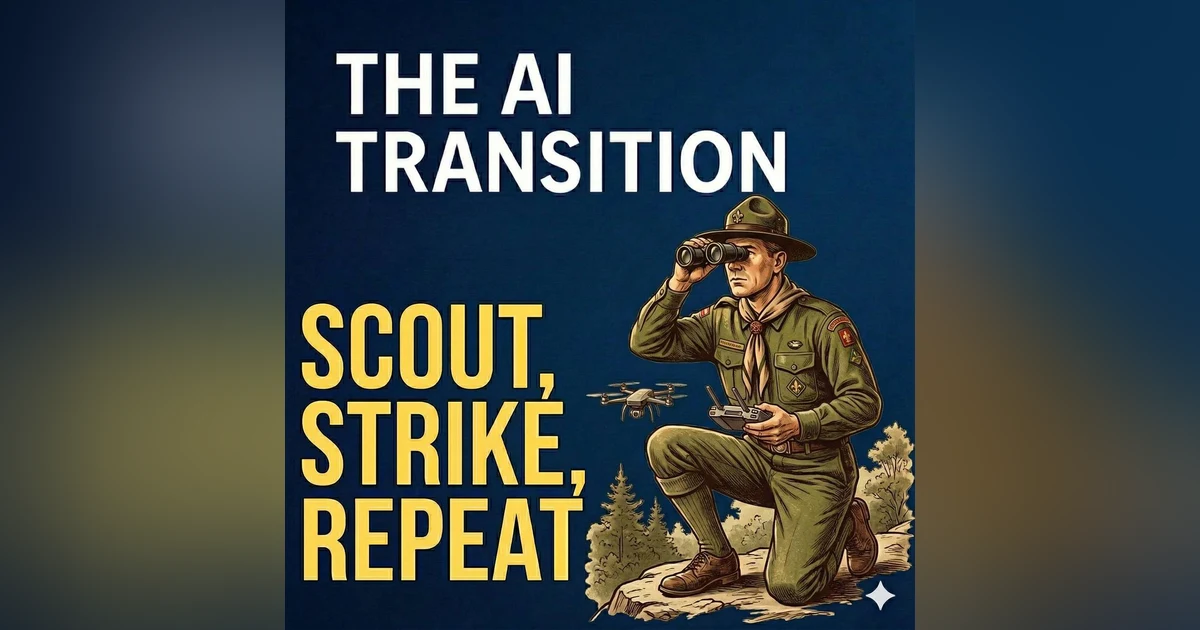
Atlassian just cut 1,600 people — including the teams building their own AI. What does that signal for the rest of us? Stephen and Lauren dig into the hidden coordination tax bleeding most teams dry, why the number five keeps showing up as the sweet spot for high-performing teams, and the emerging scout/strike model that's letting small groups outrun large ones. Plus: uncomfortable leadership truths, and what you can actually do about all of this today.
00:00 Intro
01:35 Coordination Tax
06:15 Team Math
09:40 Magic Five
14:45 Scout & Strike
21:10 Leadership
28:33 Wrap Up
Atlassian just laid off sixteen hundred people, including some of the teams that were building their own AI. They cut the people closest to this technology they said they couldn't survive without. What might that mean for the teams that you're in right now, and what can you do about it? I'm Steven, and this is the AI Transition, and with me as always, Lauren.
SPEAKER_01Hey Stephen, this is a good one. Let's dig into today.
SPEAKER_00Yes, yes. I'm quite quite close to the bone, and we we know people who've been involved with this as well. Um and we're we're seeing this happening in other organizations too. So this is a very relevant one.
SPEAKER_03We're gonna dive into quite a few interesting things that I think um will be affecting and/or touching on pretty much everyone listening in a moment. So uh the hidden tax that's been kind of bleeding organizations' drive for decades, tax, the coordination tax. We'll dig into that. Um, why the number five keeps showing up as the magic number? We're going a bit woo-woo, Stephen. Magical. No, I'm kidding. Um some new archetypes that are appearing in organizations, some new, I guess, mindsets or squad structures that we're seeing emerge, um, some uncomfortable leadership conversations. And then as always, we try to give you some practical tips that you can take away.
SPEAKER_00Something practical after after this, after we after we scare the bejesus out of most people, then we then we come back and say, hey, look, there is something you can do. Maybe just a small thing, but there's still something that we can do.
SPEAKER_03So let's dive in. So we uh look, you know, don't we love the word tax? Um, especially these tired ages. So the coordination tax, this is where, you know, uh we've got all the overheads that we we deal with with our day-to-day work. So this is meeting preparation, you know, documenting decisions, cross-team ticketing, you know, where we've got all these meetings, we're trying to get all the knowledge. Um and some of the interesting ta stats around this one, again, it's not a new problem, but it's growing, is that we've got 60% of our time being spent on coordinating the work and then only about 40% available for execution.
SPEAKER_00Can can can I just put some health healthy skepticism on those numbers, right? And there's been lots of um lots of different studies that have been showing this. I think it's a lot more than 60% of the city.
SPEAKER_03I was gonna say, what do you reckon? I actually think it's more like 80.
SPEAKER_00Yeah. But look, look, look seriously. But when when you talk to most people, what they end up doing most of the day, it's it's the meetings, it's the chatting to people, it's the sending messages, it's replying to emails, it's having right and all of that, nearly all of that, is all based on coordination about who's doing what, when and and what's going on. Um actually doing the stuff, that's really a small part of the for most people's jobs.
SPEAKER_03It really is. And you know, particularly, dare I say, for people like you and I, where we're trying to help teams, you know, work more efficiently, that's that biggest challenge of breaking that habit of I just need a meeting, I need to talk about this, I need to bring people together. Um, and part of the challenge we've got with AI now is that you've got much more output without any of the structural change, right? So if we know that even since uh good old 2020, that this meeting load, and it's just a constant pattern for all of us, is increasingly, you know, growing significantly as these teams get bigger, you're losing that shared context. And now you've got output growing as well. And the rise of um this new phrase of the agentic tar pit.
SPEAKER_00Quite like that one, to be honest.
SPEAKER_03It's quite a visual, isn't it?
SPEAKER_00Because I I I do feel myself um kind of stuck in that tar pit quite a lot these days.
SPEAKER_03Beat getting pulled deeper into the tar. Yeah. You know, where you've got all this activity, not so much the outcomes, like as people starting to figure out how to use these tools. And, you know, I've run my meeting with my, you know, AI and tracking all my transcription. Now I've got to update all these notes. And so you've got this, you know, smart more output and it's reducing some of that manual, but still it's not helping you to coordinate the work. You've still got that coordination cost.
SPEAKER_00What I'm seeing in a lot of teams these days is that, you know, and these aren't kind of frontier teams that are kind of you know agentic in AI first. You know, they're you know kind of like you're standard teams within within within large organizations. Any AI usage so far just now is mainly been around to simplify some of the manual tasks that they're already doing. So, for example, I'm using Copilot to make a summary of a meeting, right? Uh and so instead of taking notes yourself, people are using that and then cutting and pasting it that into a file somewhere, which means that while teams are getting bigger, we're just automating some of that documentation part of it, but not overly fixing a lot of the problems.
SPEAKER_03Yeah, are we actually optimizing any anything at the end of the day? We're creating a lot more content, but are we actually thinking about how we need to interact with each other more efficiently?
SPEAKER_00Yeah. Well, whereas teams that are kind of been using this a a bit more, it's not just about automating or AI fying or identifying or whatever words you you want to use there of the existing processes. It's actually looking at those and then saying, well, actually, do we need to do that? Can we not have, you know, the bots take that part of it, that part of the coordination? Do we really need to be doing this? One of the other things I I would throw in here is that I've just seen teams getting larger and larger, particularly since the pandemic and since the vast majority of corporate teams are meeting in Microsoft Teams online. There's no restriction now about how many people you can have a team in order to physically get in a room anymore. So you can have dozens and dozens of people now. And that's quite common.
SPEAKER_03And we know that we're gonna start to talk about this this uh number of five shortly, but we know the more people we add into that mix, the more lines of communication that you've got. And you're creating more and more of that output. And how do you actually bring it together to optimize it? So hence this agentic tar pit, because it's kind of pulling you in. So we're not yet seeing those um uh I guess benefits of introducing these tools if we're not looking at the broader picture of how we actually coordinate.
SPEAKER_00Well, why don't we kind of move on to that and that kind of that mathematics of the number five thing we see popping up quite a lot? But before we get to the number five, um, what I've been seeing, as I was saying in the previous section there, is just the number of people that are getting added into teams just now. So the so the overheads that go is when you've got eight people, twelve people, fifteen people, twenty-five people, right? The communication paths that trying to coordinate all of them, if you try and draw that out in a diagram of where the communication is going, it's completely crazy.
SPEAKER_03Oh, it is. And like just for the simple maths, like if you've got five, it's 10 pathways, right? Once you hit 20, it's rapidly growing to around 190, 200. You're hitting 50, we're talking 1200. And you and I regularly work in, I'm working, well, maybe we will keep names out of it. But where people, how big is this team getting? Oh, yeah, it's gonna get up to about 50. And you're like, okay, well, maybe it's time to scale into some streams and teach, oh, I'm not sure about that. Like, we want to make sure. So once you think about how inefficient hundred lines of communications, which is crazy.
SPEAKER_00So it's either overwhelmed by the number of passive communications or there's just no communication going on. And what I mean by that is so there's a there was a couple of meetings I that I attended um earlier this week and went on, and there was, I think there was 18 people in this one team who were uh uh having this discussion. But the reality was there was three people in that meeting having the discussion. Only three, right? The other, the other 14, 15 of them were cameras off, not really saying anything. I'm just not part of any conversation, probably not even listening. Um when we say multitasking, it means they're reading the paper or they're you know arranging their calendar to pick up their child later that day or whatever. That's true.
SPEAKER_03And or look at bears trying to be less any cool, but let's be real. And look, we're all juggling a lot at the moment, but often where you've got these overloaded organizations with specialists that are being pulled from pillar to post, some of them are actually doing their other project, they're keeping one ear in the conversation and really how effective can you be?
SPEAKER_00But what can change, and what we've seen with some uh both both ourselves and also reading a lot more about what's happening out in the wider world, as the capabilities of AI improves and what you can do on your own and the scale of what you can do improves, having that that many people in a team, you probably don't need as many now. Um and you know, I'll I'll share some personal anecdotes in in in in a minute of you know how I've found that the the kind of work that I'm able to do now on my own, which normally would have had like three, four, five people. It's it's you can do a lot more now if you're using these tools, right? Which means that you probably only need four or five you know generalists who are able to span that whole knowledge base for whatever it is that you're doing, but they've got those agents working with them. And so now the communication is yes, among those individual agents, but that's you know easier because it's computer to computer. You've got four or five people that you're coordinating now. And that starts to change things.
SPEAKER_03Oh, exactly. And you know, where did that number five come from, Stephen?
SPEAKER_00Um is it five fingers on a hand? Is that it?
SPEAKER_03Yeah, I mean totally, totally. I know I've done a harsh left turn there. But when we think about this number five, it's pretty much how many um, I guess, meaningful communications and connections you can make with a group of people at once. So when you start to go out wildly, you can't have that connection anymore. So we're starting to see organizations use this. Okay, we're more efficient with these tools now. We use it as an excuse to let people go. But really, the ambition could be there to actually, you know, deliver more value. Let's do more strategy work. What can we actually do when we unlock our people and and pull them into those smaller team sizes, which isn't really a new concept, right?
SPEAKER_00Yeah, well, I do what was coming up from there as you were saying this, you know, and I'm really showing my age here, but I remember when Facebook first came out, like you know, 15, 20 years ago, you know, et cetera. And right, and uh, and at the time I remember people saying, How many friends do you have? And I would say, I think I've got about three or four, maybe five at a push. And they're going, Oh, I've got 163. And it's like, what? No, you don't.
SPEAKER_03They're not your real friends. So not your friends.
SPEAKER_00Right, but that is a that's a good illustration of I I do have four or five good friends, and and I can't cognitively cope with any more of that. Um, so if there's anyone out there who actually wants to be my friend just now, actually, all the places are are filled at this moment in time. Um, but it that's just human human nature that there's only so much for most people um of you know what what you can cope with.
SPEAKER_03And it's the five kind of people that you've got in your mind. Like it was funny when we were getting ready for this. I was thinking, oh, you really like those close interpersonal relationships you've got. And when you think about forming the chemistry of a team, so you're kind of looking for for those natural handoffs and connections. So if you're over overwhelming them with all these 1200 odd interactions, how can you possibly get that nice rhythm and flow and connection? So we're going back to, you know, it was a bit of a classic and we whisper the word adja. Um team structures where we talk about the concept of a perfect size team being, you know, seven plus or minus two, five or nine. And um, I was interested to know uh uh the fun bit of trivia here, and maybe everyone else uh, you know, knew this. The the phrase two pizza teams. Do you know where that came from, Stephen?
SPEAKER_00I saw it was it was Google or Facebook or something like that, but basically um the the amount of food that you needed in order to feed feed a development team.
SPEAKER_03Jeffrey Bezos, my friend, he coined this phrase apparently. Yes, and an off-site, right? Where he's like, oh, you know, we teams need to communicate more. And Bezos stood up and said, no, communication is terrible. Many wanted to talk about, you know, decentralizing a company where small teams innovate independently. So that's where that two pizza phrase came from. You just need a team um, you know, small enough that you can feed them with two pizzas. So this is a concept that's been around for a little while, but now we can really see how we can actually empower these teams of tools.
SPEAKER_00Are they family-sized pizzas? I mean, are we we're talking the big ones here, do you think?
SPEAKER_03Uh surely, right? With thin crust, would you go to thin crust?
SPEAKER_00You would you you would think so. Yeah, it would have to it'd have to be the big ones because like two small ones, I don't think would I don't think that would do it.
SPEAKER_03You're right. You'd be pretty you're gonna eat some appetizers there. Some garlic bread. Two pizzas garley bread. We've really gone ridiculous.
SPEAKER_00Getting back on track. That's what we're seeing as well, is that these smaller teams, because you can do more within these teams now. My experience over the last couple of weeks, I mean, we w we've been developing some systems that in the past would have maybe taken, I don't know, three, six months to pull together. That we've literally been able to do part-time in a week or two, using kind of you know the latest tools within Claude and Cloud Code and co-working. Uh, and that's been quite jarring to be honest. There's been times where we've been creating some of that, and I was remembering back 10, 15, 20 years ago when what we were doing there would literally be taking a whole weekend or you know, that's two weeks worth of work and the rest of it. And it was a it was a couple of sentences of vibe coding and suddenly it was there. I and and that's a bit shocking, to be honest.
SPEAKER_03That that's and when you think about the different kinds of skills that used to be used, and that's what this really is about, right? You're reducing those external dependencies, you can do more yourself with these tools, you know, cover more of that surface area versus pulling in these separate specialists. So that's what it is quite mind-blowing when you actually get inside these tools and see what you can do just personally yourself. So it's it's not about kind of replacing the humans, it's actually just being, you know, uh delivering more value. We'll use the V-word here. Uh with these smaller teams.
SPEAKER_00Yes, and quicker as well. So you you came up with you're finding some analogies around different ways of structuring these teams.
SPEAKER_03Yeah, well that's what I found interesting too, because we're we're still like we're talking about some of these older concepts here. You've got the two pizza teams, we've just already talked about how you've got this uh coordination tax across the top, because you've still got many of these smaller teams. But we're starting to see these um uh new phrases coming out where we've got these concepts of scouts and strike teams, which I don't know, Stephen, did this made me think a little bit about we've all heard tiger teams before, right?
SPEAKER_00Um the the tiger team thing doesn't really work for me, but okay, okay. But I don't know.
SPEAKER_03But it feels a bit like that, but where you would, you know, someone who came along and go, We needed, we need a tiger team for this, and we'll get our five or six best people, um, you know, pull them out of a team and that other team doesn't matter what they're doing now. We've got our guns in this strike team. So, well, tiger team. Anyway, I've already I've segue, but you know, when you start to see these new phrases. Um, when we talk about these scout and strike teams, we're talking about the whole concept of exploration versus execution, you know, good old, you know, investing in some good quality discovery, which some organizations are hesitant to invest in because it's like, hang on, we just we know what the problem is, let's just fix it. So you've got this concept of these two operating modes, a scout and a strike team, which is pretty much as the name suggests, you've got a scout, but this time they're running solo and they've got a full AI toolkit, right? So they don't have to coordinate with anyone. Um, and they're gonna produce, you know, get those initial findings and produce, you know, something viable to work with. And then you've got the output coming back into the strike team. So what you can do is if you're fully kidding someone out, and then you're your leading person running out and scouting the environment, it's quite a good analogy. Um, they can do this within days and months with the right toolkit, right? Because they haven't got dependencies. They've got, you know, they're unto themselves, they've got a clear field to run. So when you've got that nice cheap, that's an interesting word, isn't it? Cheap exploration, you're gonna get more experiments and you know, more um volume to actually look at. And your cost actually reduces dramatically. And like you haven't got a team of people exploring for weeks and months.
SPEAKER_00And that's that's what came up for me as you as you were talking through that there. You know, because previous language that we've used a lot, um, is it kind of common within the industry, you'd be doing a design spike, right? So you you you'd be off to doing a spike. But it's usually for a whole team. We'll take a sprint, as in you know, a couple of weeks. They will go off and do a design sprint for for a couple of weeks and and spike that and do a proof of concept and blah blah. But you do have you know a number of people doing it over, you know, probably a couple of weeks. Whereas this is different. This is somebody who's going off for a couple of days to scout ahead but with a full toolkit, as you were saying.
SPEAKER_03Exactly. And if you think about the effort that's often involved where you're doing any kind of design or discovery work, you might be interviewing dozens of people, pulling all that doco back. But if you've got a fully catered um solo scout out there, the amount that can actually pull in using these tools is quite incredible. Again, it doesn't reduce the need to interact with humans, but it just helps you to cut through some of that processing. So the idea is you've got your scout running out, bringing it back with their findings, and then handing this over or working with the strike team, Stephen. The strike team. Um, this is where the number five reappears, right? So you've got your five uh generalists, which is, you know, uh when you think about generalists, sometimes we think, oh, hang on, we're not experts, but that's not the idea here, right? You've now got this really strong AI fluency and you can scale the outcomes from your scout because they've got those skills that you can actually drive that value on. So the whole idea being that you can actually scale your output using these tools and automation. So you can reduce the risk of loss. Oh, like look, look the face and the arms across what's coming up for you, Stephen, what's coming up?
SPEAKER_00So I've got a question for you. So are you are you more are you more of a scout or are you more of a strike team person, or are you standing beside the sidelines, you know, coaching the scouts and the strike? Where would you like to be?
SPEAKER_03Oh, it's an interesting one, isn't it? Look, I don't mind a bit of scouting. It's nice when you can kind of dig into a problem, like it probably leans into my old analyst um days. But you can also see if you're part of that strike team too. I'm thinking of the chemistry, like in a band of people, dare I say, where you're all coming together.
SPEAKER_00The band of the solar singer, right? Okay, yeah.
SPEAKER_03Um, but I think it would also, you know, be very exciting. Look at me, I'm like, all of the things everywhere all at once. It would be also really exciting if you can, you know, work with the team in these structures to see what you can really do in such a short period of time.
SPEAKER_00I think for me it's overwhelmingly the scout. I would want to be the scout.
SPEAKER_02Shock, Stephen.
SPEAKER_00You shocked?
SPEAKER_02Shocked. It's not like you at all.
SPEAKER_00That that idea of of just on your own being able to go off and investigate and explore and play with stuff and pull it together and and then come back. Is this an introvert-extrovert type thing that you're going to be, you know, you're sending the scouts off or a bit more of the kind of introvert talking to their AI buddies and you know leaving the extroverts to have the party with the pizzas behind? I don't know.
SPEAKER_03I mean, I think it could be. So you're not having any pizza, Steven? No pizza for Steven.
SPEAKER_00I I've probably t stolen a couple of slices before I go off my scouting mission, I think. Probably.
SPEAKER_03Oh, look, the the scouting is so appealing too. When you think about, you know, sometimes at the end of your working week now, because you're just doing so much context switching, covering so much ground when you've got these scaled organizations with complex problems, the exhaustion alone is is huge. But even this strike team, right? If you think about five is still a really nice number. Like you still could lean into some of your introverted ways. But really, what we're talking about here is trying to think about uh the the types of people that you're hiring as well, like thinking about what you're being able to do with these tools now that you you look, my dev friends, not to suggest that you're out of a job at all, dear God. Um, but now you've got vibe coding more people who can actually solve some of these problems themselves. So now you're looking for more people with that ability to actually evaluate quality and understand those outcomes. Um, and you you can actually do more with your people that you're not requiring five or six different specialists, you're getting more of that generalist skill set and being able to use these tools to drive that out. What do you think?
SPEAKER_00Well, so what does this mean for leadership?
SPEAKER_03This is always the hot one, isn't it? Leadership, the L-word. So you know, again, this is that whole challenge around structural change, not that, you know, incremental change where you just keep adding more and more people in. Like, how do you actually mobilize these new types of teams?
SPEAKER_00So this is this is your this is your classic, and everyone's eyes will just roll in this. You know, this this is the big re-org that comes every couple of years and shakes up the whole area, right?
SPEAKER_02Trailblazing stuff.
SPEAKER_00And look, let's lead back to what we were saying right at the beginning of the of the episode today. You know, um, what Adlassen have done is they they've done this massive re-org. Like you know, 1600 people, something like 10% of their organization. Um, that's that's big, and they and they did it quite quickly, quite brutally, from what I've been hearing as well. It was a definite rip-the-band-aid moment off. You know, there was a number of you know, very senior people who just found out that morning and were told that they'd a couple of hours left on their laptop and then their laptop would stop working and they had to hand it in and they didn't need to come back in for the next couple of weeks. So that's you know, it's one way of doing it. With something like this, do you think that it is more kind of that revolution rather than evolution change? Is is this is it better? Can you or can you bubble this up?
SPEAKER_03Can but we all know how long it takes. Like I feel like we're still solving similar problems over the last 20 or 30 years. It takes a while to get that mindset. You know, Accenture came out this week and said, Hey, we're actually no, we're not looking to cut costs, we're actually gonna send our consultants out with you know, half a dozen or so agents that can actually make them much. More efficient. We want to tap into their talent, which is what you want to see. So that's where you kind of got to read between the lines of what's actually going on here when you see these, like I said, revolution of letting a bunch of people go versus trying to actually lean into these new tools.
SPEAKER_00The two kind of news stories that kind of went with that was how their profit margins had greatly increased. Um they're still charging the same amount of money to their clients, um, but they're using a lot less people in order to be able to do it. So they've got their profit margins are are a lot bigger there. Um and the other one was that there was um uh a team last last year involved in the last six months or so, um, that uh a team of five again um with I think they said they had 18 agents working with them and was able to do what previously would have taken you know six months with a team of 40, they were able to do three months with with a team of five. So significant shift there.
SPEAKER_03Huge. And like you're saying with leadership, this means like how do you obtain that current workforce, how do you actually reorganize them so you can tap into that existing talent rather than just go, oh bugger it, we'll let 30, 30,000 people go or something like that and and massively improve our our profit ratio. So it's it's needless to say, interesting to see how this is moving through different organizations, particularly in this environment. And it's hard, the whole cost-cutting conversation.
SPEAKER_00Yeah, and especially with everything else that's going on in the world just now as well, right? So none of this exists exists in a vacuum. So there are opportunities here for, and in horrible big quotes, efficiencies within the organization, which you know, AI has been used a lot just now, and there's an element of truth in there as well that's really challenging.
SPEAKER_03Absolutely. And look, you know, if we think positively, we're trying to do a bit of positive thinking with Stephen, you can use some of these new patterns to reduce your risk, right? Like, can you do more scout missions? Like, can you introduce, you know, a bit of that, dare I say, good old-fashioned design thinking? Like, can we send something out? Can we do some experiments, do some more scout missions to reduce our delivery risk in the meantime while we're evolving?
SPEAKER_00What came up for me as we were prepping for this was if you aren't able to do a scout mission mission on your own organization within your own team just now, you can view what you're doing outside playing with the likes of, you know, I'm ChatGPT and Codex or Claude and Coworking Code. That's your Scout mission, right? Because you actually do have all the tools there to go off and do something. It's coming up with a mission there and and go and do it. But maybe doing it in a way that is similar-ish to what you're actually doing within your within your existing organization just now. So whether that's you're trying to be more efficient of how you're pulling together different sorts of briefs or um uh your how how you're planning things, or and it could literally be, you know, do a Scout mission of how you could plan your holiday differently the next time. And it's much more than just a single prompt. You know, what are all the other things? What are the things you could create? What's the the deep research you could do, you know, et cetera? It's finding those opportunities. Because I know we know how difficult it is to in quotes get away with this within existing organizations, because a lot of those organizations are a bit like the rabbits in the headlights just now.
SPEAKER_03Absolutely. And even just challenging your own mindset, like you're saying, we we've been playing around a little bit with Claude Cowork and just thinking all the different tools that usually touch and tap into, how could I, you know, use a co-work tool instead of you jumping in and out four or five different systems and thinking, well, here's where I might need a dev, how can I work with an agent? So run your own little experiments to see, you know, get your head in the game around what it looks like to work in this way. So if you're in delivery and you would think, okay, I've got this opportunity to do a scout mission, what might that look like and bring back?
SPEAKER_00There was one thing you said to me last week, which can really kind of got me, was um when you were saying, well, you could play around with your using the the researcher agents thing we've got going. Well, why do you delegate more there? I think I said something along the well, but I I I really like doing that. And I was like, Yeah, but that's the point. You might like doing it, but they can actually do it better just now. So, and it's getting over that mental barrier internally. I I found that difficult. Um I and we're using these all the time.
SPEAKER_03It definitely, and and you've got to you've got to think, all right, well, I can still scratch that itch, but I can get a lot of the grunt work taken away from me because you've got your scouts going out and bringing all this high-quality research, cutting through the top layer of it for you, and then you can spend more efficient time versus some weeks gathering it.
SPEAKER_00Exactly. And that's probably where I ended up as well, that it was doing it. I realized that a lot of the stuff I was enjoying doing was there's a a lot of that just kind of manual, I knew what to do, et cetera. But actually the difficult bit was the real thinking bit once you've got all of that, and that's where the effort should really be is it is using your own views and opinions to go over that once that kind of the basic stuff is there.
SPEAKER_03Stephen, it looks like we've gone, we've spent nearly a half an hour digging into this, and there's so much more we could actually go into as well.
SPEAKER_00Well, well, maybe in order to cleanse the palate a bit, we we need one of your jokes again, Lauren.
SPEAKER_03It's difficult, Stephen. Um I'm having to lean more into puns these days, but thinking thinking about the the theme today, and I think we were kind of you know riffing on team sizes and the concept of a shrink ray came up. So I dug into that. Are you ready?
SPEAKER_00I'm ready.
SPEAKER_03That's pretty bad. A person goes into a hospital and says, Doctor, help me! I'm shrinking. And the doctor says, now now, you're just gonna have to be a little patient.
SPEAKER_02Dear, yes, brutal. It's brutal.
SPEAKER_00Yes. I won't even ask whether that was one of your own or whether that was one of your robot friends.
SPEAKER_01Give me all the robot credit.
SPEAKER_00I I did laugh at that one. So I don't know if that says more about me than you, to be honest, but yes. Um thank you, Laura. A bit of a recap, you know, it's it's not just about changing what teams can do, you know, it's it's it's about changing what teams should look like now and those smaller, higher context, high trust teams, you know, potentially with scouts for exploration. I think that's that's becoming more normal. What's your overall take for the episode we've just done learned?
SPEAKER_03Yeah, I think it's like really thinking about what you can do now yourself. So, like if you're an analyst and used to rely on going off to a UX designer to do some sketching, maybe you can do some of this yourself too. And um, what kind of agents can run off and bring that research back for you? So it's really thinking outside the box of where we used to hand off. That's what's exciting about it, the empowering side of it, where maybe you're frustrated, oh, I wish I'd learnt to cut some code and now it's within your reach. Maybe not to the point of some of your, you know, badass dev friends, but it's there and you can actually, you know, um scrape some surface of it at least. So it's it's it's exciting. It's that mindset set shift around what you can do yourself.
SPEAKER_00Amazing, Lauren. Thanks everyone. If this got you thinking, please share it with someone wrestling with these questions themselves. And subscribe and comment wherever you're listening. It really genuinely helps. And we'll see you next time. But remember, you still matter, at least for just now. Thanks, Lauren.