


 Apple Podcasts
 Spotify
  RSS Feed
 Ahead of the Track
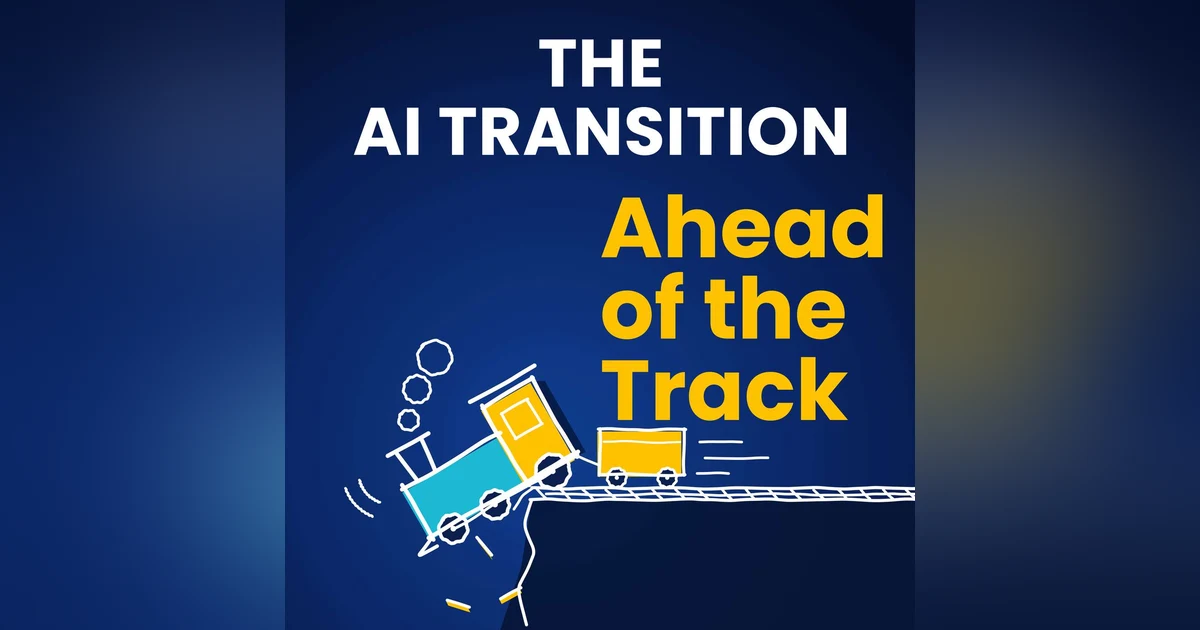
We recorded this on the day Firmus pulled its float. We still think it’s relevant, and maybe even a little prescient. Stephen and Lauren talk about the A$44 billion AI company most Australians had never heard of, and about rules being written after the projects were already approved. Then they look at what Melbourne’s 1880s railway boom tells us about who carries the cost when the money runs ahead of the economy.
They cover diesel generators and trucked-in water at Bell Bay, Canberra’s “Getting It Right” consultation, Victoria’s new 150-metre buffer heading into the 28 November election, and the 1884 Octopus Act, which gave Melbourne railway lines to places nobody lived yet.
Chapters
00:00 A float bigger than Coles
02:35 The rules that weren’t there
07:55 The federal rules
14:19 Victoria’s rules,
21:47 The Octopus Act
The AI Transition is hosted by Stephen and Lauren. We cover AI developments with honest, human-centred analysis — no hype, no doom, just the questions that matter.
Subscribe wherever you listen to podcasts.
Follow us: https://www.aitransition.show/
The AI Transition is a People Over Process production.
You still matter. At least for just now.
Near the end of October, a company you've probably never heard of is floating on the Australian ASX for approximately 44 billion Australian dollars. This is the biggest float in nearly 30 years since Telstra in 1997. In comparison for size, it's bigger than Kohl's and very close to Wooly's, the top two supermarkets in Australia. The company's name is Fermos, and its function is to build data centers and to rent out their computing power. It's historically a loss-making operation, but has ambitioned to be making 10 billion Australian a year within five years into an environment where the rules have not yet been set. And we've been here before. In the past, in 1884, with the Railway Octopus Act. How about that? I'm Steven, and this is the AI Transition. And with me today is Lauren. How are you doing, Lauren?
SPEAKER_00Stephen! Woo-hoo! All aboard the Octopus Railway. Indeed. Yeah? Oh my god.
SPEAKER_01So have you heard of Firmness before?
SPEAKER_00That's um the my preference for mattress firm. Is that what you mean? How hard the mattress is?
SPEAKER_01Absolutely. $44 billion in mattresses. That's what they're going for.
SPEAKER_00That's a bargain. Snap those up. Um wow. No, seriously though, not a word, which is pretty impressive considering um they're going to be worth more than where we buy our groceries.
SPEAKER_01Uh yes, I don't know. And that that float price at $44 billion, which is which is bigger than Kohl's, right? And it's very, very close to Wooly's, it also might be double that as well, right? So it might be as big as Telstra. The way the market is just now and what's happening with these potential valuations is crazy. Um and you're right, nobody's heard of this mob.
SPEAKER_00And that's huge. Like this this loss-making organizations, like the, you know, immediately the spider sensors are tingling.
SPEAKER_01Yeah. So they've they've got operations in Singapore, um, or no, sorry, Indonesia, uh, doing stuff in Tasmania. Um, but they don't really have that much yet. But they've got uh about four or five big data centers um in the in the pipeline, and there's all these crazy valuations of much money that these will make. All the money behind it is all debt. All debt that's been ra raised on the markets. So again. And open AI and Meta are supposedly the customers for it. So these are the middlemen for open AI and and Meta. Yeah.
SPEAKER_00Right. Must try not to be immediately No, I think it's perfectly fine to be immediately cynical and be like, oh no.
SPEAKER_01Yes. Yes. Uh if if if if we go to what's going on in in Bells Bay and Tasmania just now, um so that was approved um by the local council. So the you got a local council here who are approving, you know, these massive, massive data center um things which have not just local local council impacts, but these are statewide, if not national impacts. Anyway, they they they approved it. Um it's got 276 proposed diesel generators that might go with it. Um uh some of the other stuff that I was reading about it as well is that it it's it's potentially going to be um trucking in water during drought.
SPEAKER_00Um In Tassie, right.
SPEAKER_01In Tassie, in Tassie, which will be just be great. So that so they'll be feeding the data center, meanwhile, all the poor Tasmanians and uh and the sheep and the rest of it might be going a little bit thirsty, but we'll be we'll be feeding the generators, so it'll be okay.
SPEAKER_00That's what and uh uh again, I'm coming up to speed. Part of this podcast is me coming up to speed with what's going on. How did this get past a local council? Like Tasmanians traditionally will fight, you know, hand in tooth, this sort of stuff.
SPEAKER_01It's just a way that so it's it's to do with the lack of rules that are there just now. And so these sorts of um uh investments were just were never envisaged. The the rules that are in place, um you know, they were set decades ago, like in the 90s and stuff, right? And so you've got something like a data center that comes along. It's basic the the the planning um permissions that are there are archaic. They're set up for something that's nothing like this. But that's all that's there just now. And they've basically gone through in a nod and a wink. Um and because they have, and in Victoria there's there's a there's a thing called the um the the fast track approval process as well, which basically bypasses the councils and goes straight to the minister and the minister just signs it off. There's been a a gold rush with this stuff where um over the last six to twelve months these data centres, and there's a number of them that um have been uh approved or they're in the pipeline to be approved. And there's at the moment, and we'll get to this in a minute, there's no real rules around this. And the scale is humongous.
SPEAKER_00Well, so it sounds like a bit needless to say, a bit of a land grab that we've talked a little bit about before from the big tech bros coming in and grabbing onto these opportunities while they can.
SPEAKER_01And what's your what does your gut tell you about a company that's not really been around that long, that's lost a lot of money in the last couple of years, and is telling you that it's going to make billions in the years to come just trust us and invest lots of money. What does your gut tell you?
SPEAKER_00I mean, it it sounds a little bit more like betting, right? At the race, at the race course, not so much a business. Like you if you go to Kohl's or Woolies, you know, that's priced on on the trade that it does every week and the demand from the customers, right? Whereas we're kind of um focusing on here or aiming at uh being priced on what we hope it'll do in five years, assuming there'll be demand there.
SPEAKER_01And and and if you compare that to to Kohl's, I mean, because Kohl's is quite big. It's got quite a known track record. 1800 stores and 120,000 staff or something like that.
SPEAKER_00Um And we all live about 10 minutes drive from one of them, right? Whereas this company, for want of a better word, two operational data centers.
SPEAKER_01Uh yes. Um that's it just now, right? Um potentially another five massive ones in the pipeline. But that's it. Um my gut also says to me that yo, what a roll of the dice this is. Like to be honest, the whole investment boom around AI is becoming such a roll of the dice just now.
SPEAKER_00Big time. And we're all in Coles listening to Coles Radio. I sometimes no, I won't say I purely go there for the radio, but we've we've just got no idea. I mean, we've all heard that the data centers are coming, but do we understand the investment model and how this is getting through our local councils and the huge impacts?
SPEAKER_01This flotation, which is happening potentially in a in a couple of a couple of weeks' time, that's the kind of the vehicle, that's the investment arm, the company, the shell that's been put around this in order to make this in order to make this happen. So this this company is getting floated um, I think in two weeks' time is the time of this recording. This company will be off and running. And it might go like SpaceX, which promised to you know build data centers on the moon and have basically got nothing behind it, um, and is now worth trillions and trillions of dollars. And Musk is the richest man in the world because of these huge dice rolls that are getting made.
SPEAKER_00It's a massive bummer, Stephen. There's no other way to frame this. Eight minutes in, we're all trying to just spiral. Um all these floats and IPOs and and you know, good old fatty buddy, as my parents would say.
SPEAKER_01But but look, and we will get back to the Octopus Act because this this has happened. This has happened before. This has happened before, right? And there's um what is quite common is that in these sorts of real frothy investment cycles is that the uh the market gets way, way ahead of the actual economy underneath. And it's and there is a come to Jesus moment at some point where things come back down to earth, whether that's months or years or profits, yeah. All right, but potentially this might be this might be part of the froth. But if we have a look at the federal rules, what have you heard about federal rules? What's percolated through? Has anything percolated through?
SPEAKER_00I mean, God, we're we're all, you know, uh trying to survive day-to-day. I must confess, sometimes I'm shutting out this stuff. So so, Stephen, feel free to educate me here. Tell me about these federal rules.
SPEAKER_01So there's a consultation period that's going on just now. So look, our Prime Minister, you know, Albany C. announced this that there was new rules that were going to be put in place um for data centers and and and infrastructure build out, with with basically saying, so this is the the paper that was released, and it's actually worthwhile going, downloading the paper or just get the paper and throw it into your robot, or just ask the robot what the summary is, right? Of the the paper's called Getting It Right, Building AI Infrastructure That Works for Australia. So basically trying to put some rules in place that mean that when these data centres get built, then it's going to be a positive for Australia. There's there's a bit of a win-win that's that that's there. So there are some there are some some big constraints that are part of this. The the first one is around the energy demand. So there's been a lot of stuff in the States about how these the data centers, without these sorts of rules in place yet, although in some states that they are they're they are coming now, that they were sucking out the energy demand from the local communities so that the energy prices went up elsewhere. So one of the first rules is that the when these data centres come on, it has to be by uh renewable energy um that's built, um, but then that can be backed by gas batteries or hydro. That's in theory when you start using um uh AI in Australia, it will be via sunshine, it will be from renewables.
SPEAKER_00Definitely not from a damaged environment that struggles to get No, stop it, Lauren.
SPEAKER_01Um well this this probably isn't gonna help you. Queensland immediately said, mm, not so much, we're actually gonna use gas for this. Northern Territ Northern Territory or look like they're gonna down go down the same path. So whether this one holds, and we'll come to some of the election stuff that's happening um soon, we shall see. But in theory, it should be renewables are going to get built in order to cover the electricity demand, and it'll be up to the data centers to build out that renewable uh energy and then they can back it up by gas or batteries. So has that held? That would be good. That would that that would be good, right?
SPEAKER_00Absolutely.
SPEAKER_01They're also on the hook that um if the grid is stretched, you know, and we know a fair fair amount of this, they can flex demand. Basically, they can power down a bit if the the grid's getting overpowered. So that's like the demand response stuff that they have about uh being able to control air conditioning units when the when the grid's underpower, when the grid's under stress. Yes, but all of that. So again, that's potentially positive. Whether that whether these things stand is is is something else. But you know, let's take it on the surface. Points for the other one. So the other one is to not to shift the costs onto other customers. And also as part of that, it's about being able to put um money back into the community that's hosting those data centres. So there's been some stuff that's happened recently down at Geelong actually, about proposals there of, well, yes, you can build the data centre, however, you must invest in this library, this swimming pool, blah, blah, blah, in order to kind of even things out. Uh and there are rules around uh water. So prioritizing non-potable sources, basically that means um drinking water is potable. So it's basically saying you you start with all the you start with all the crap first, right? And you use that before you go anywhere near the drinking water, and you need to have good efficiency standards and you need to report on your usage. Again, whether these whether these w whether these land. But look, if all of those did, if it was renewables, they would shut down and things in the tough, the the costs um were and the and the benefits were actually getting played around into the neighborhoods that were doing it and the water was sorted, then in theory it's not necessarily bad.
SPEAKER_00No, it's you know, it's sounding like good intentions to, you know, contribute to the community, you know, bring some more uh community resources through, protect the water supply. Um, I mean, you know, we'll we'll try and stay positive here. Hopefully, some lessons learnt from the states where we've seen some major catastrophes off the back of this.
SPEAKER_01An important thing about the federal rules is that in theory, the states can go stricter than these rules, but they can't go weaker. So in theory, this is a base, right? Whether that survives contact and other sense, what's happening in Northern Territory in Queensland's, um, because you know, different flavours of government there, we shall see whether that actually lasts and whether the the data centers, there's a huge one that's being built west of Brisbane um by Anthropic, who meet clods. There's a huge one there, and they're in discussions now whether that's going to be um the primary source is going to be gas rather than renewables. So, because the Queensland government's got a different view on this. We shall see how much these rules last reality.
SPEAKER_00Look, I've got beef with West Brisbane at the moment because that's where I broke my wrist two weekends ago.
SPEAKER_01That's very true. That's very true.
SPEAKER_00Such beautiful nature out there, I can't imagine. It is a big data center.
SPEAKER_01The challenge for me mainly around this one is that these rules are not retrospective. So the 27 data centers that have already been approved, these rules don't apply for apply to those. So this is only ones that are going to come after this legislation is passed, and that legislation isn't scheduled to be coming on board until the in into the new year, so probably February, March sort of timescale. So you've got 27 projects which um don't follow these rules potentially that are going to be built, and the capacity of those is more than double of the total capacity of every data center that's running in Australia just now. So you've got 1.5 gigawatts of operating capacity just now, and you've got 3.4 gigawatts that's happening no matter what, because these rules don't apply to it.
SPEAKER_00Well, again, just to your brain trying to map all these rules and where they're at and who's getting in when. Yes. Wild.
SPEAKER_01So so so things have rushed ahead somewhat. Um now, Victoria, it's worthwhile saying that there's an election here on November the 28th. So these rules were announced a couple of weeks ago. They are part of an election manifesto. So again, let's see what actually happens. Um you know it's not looking good for the for the existing Labour government um in order to keep power, so whether these rules stay in place or not, we shall see.
SPEAKER_00Election manifesto, Stephen.
SPEAKER_01Yes, I know. I know. Um, but basically the energy and the connection stuff, um, just the same as the federal, right? So um, they've got to bring renewables, etc. Um, it's a bit stricter on the water. Um, you're really kind of focusing down on recycling. They do have a location one because uh actually a lot of the data centres in Melbourne are getting built in Melbourne itself, in Foots Gray, in Spotswoods. Um and so they're now saying you're 150 meters from a data center to the nearest house. Um banned from residential zones, not near schools, or a childcare. So that's Australia's own is to say 150 metres. How far is 150 meters?
SPEAKER_00I feel like that's pretty close. Like I'm looking out my front door and I do live on a pretty major road, and I feel like the you know, that's a hop and a jump across to the KFC across the road, it's pretty close, 150 meters.
SPEAKER_01So it's not it's you're you're a football field, maybe a bit more than a football field. Um now I know of at least one of the approved data centers and thinks the one down in Spotswood. That's 60 meters from the nearest house. And actually it's from a k it's 60 meters from a kindergarten it's getting built.
SPEAKER_00I'd love to know what the um decibel measurements are.
SPEAKER_01Well, there's that too, because you know that's been a huge one in the States is is around the and the sound that these data centers produce. And if you're having it in a city environment, that's pretty big.
SPEAKER_00That's huge. Do I get do you take a shot every time I say that's huge?
SPEAKER_01But it is, do you actually maybe we should be doing this to doing this on a more scale?
SPEAKER_00The analogy is much better than my hop and skip to the you know KFC for your hot chips on a Saturday night. Um a football field like you think about that, that is so close in these are behemoth um buildings that if they fall back to their diesel generators, it's gonna be loud.
SPEAKER_01Yes. Um so if so we take a bit of an analogy, because look, you you've done you know a huge amount of stuff of of change within large organizations. What what have you seen when big rule changes come into organizations? What happens to those projects in flight usually?
SPEAKER_00They usually grind to a halt, right? Because you don't want to keep spending money on something that might not comply, like if you're working with regulatory or compliance change. So everything stops and then you know you've got people who start kind of making their own interim calls on what these new rules might mean just to stop burning the cash while they wait, which is probably linked quite nicely to what you're seeing out there with these land grabs. So with these data centers, if the rules change after the election, then you'd expect the same thing, right? Some of these sites will pause, developers will make their own guesses around what they're what they can or can't do.
SPEAKER_01Yes. Yes. Um look, the the other thing that comes up for me as well is that they just go hell for leather because what they're worried about is when the changes do come in, then we might be in trouble. So do you know what? Let's just get everything built. Let's just, let's just, let's just double down and go twice as fast while there's no you know legal recourse against us. The the main thing that comes up for me uh with this is that to have such a massive investment that's going on with no rules in place just now, that's the risk on its own. Forgetting what it might actually do and what AI can do in the rest of it, that's for another for another episode. But that is significant to be doing this with no rules.
SPEAKER_00And that I think is the crux of it, right? Like in Dara Saiyan project world, you've got governance in place and rules you need to comply to. Where the rules are a bit vague, I think you're right. We'll probably have this mad dash. Get in there while you can.
SPEAKER_01Um and so look, the one we're we're not gonna go too political here, but you know, the it's worth kind of like fleshing out a little bit what might happen at the end of November in the Victoria election here. Because currently the polls are saying that you know the phone four major parties are all basically split. Um and so obviously we've heard what what Labour's proposing. Um coalition's been a bit unclear, although they're saying that it's it's more uh against renewables. So, for example, the transmission line to South Australia, they're gonna they're gonna stop doing that. They're probably gonna do more gas than solar, so your AI will come with with gas rather than rather than sunshine. One nation, from what I've seen, hasn't published anything specific apart from um Pauline isn't too happy with um the whole net zero and solar and stuff, so I can I can imagine that um it'll be more powered by lumps of coal from a One Nation point of view. The Greens have been a bit more strict in this and saying no, there's a moratorium until there's the rules are in place, we are we are done. So I don't know if any of these are going to cut through before the election or if anyone's really focusing this because to be honest, every time I look at the uh the paper or the paper, look at me, um or or or listen or listen or listen to the radio. I saw one today in the IG and it had a headline. I was like, oh look at that. Do you do you know what the headline was on? It was our own potholes. Um and I know pothol I know potholes are really important, but probably the election is going to be decided on potholes rather than any of this.
SPEAKER_00I mean, of course, what are we even talking about this for? Potholes, Stephen. Next week, everyone. Podcast potholes. Yes. Well, it's shocking to me, like thinking about, you know, coming into that next election, which we all try and hide from. They come around so quickly. You really would be looking for some straight answers, right? You want to know what each of these parties, what their stance is before you go into vote. And it's shocking to me, um, you know, about six weeks out that we've got major parties who who haven't really come out and said anything.
SPEAKER_01Yes. And and look, and even Labour who have come out and said this is what they're gonna do. What I've heard is the main Labour message just now. And and I'm sorry, Lauren, this is where we might disagree quite fundamentally.
SPEAKER_00Are you challenging my blue-collar heritage?
SPEAKER_01No, I'm not gonna say the so well, maybe, maybe.
SPEAKER_00Where are we going with this, Stephen? We usually agree.
SPEAKER_01Because the main policy that Labour's come out with is to um have a blanket and allow allowable that and people can bring dogs into pubs. That's the number one thing they're going for.
SPEAKER_00So You know, I love my dogs, but they can be a pa I'm I'm half with you there. They can be a pain in the neck in the pub. You've got to have the right vibe.
SPEAKER_01I left a pub on Friday for exactly that because there was a dog beside me and its leg was slapping my leg, and it's like, you know what, I'm done, and I left and I went somewhere else.
SPEAKER_00I've got two dogs, one of them she is great in a pub, the other one is just a nervous mess. So yeah.
SPEAKER_01But look that but you're they're talking about potholes and they're talking about you know, dogs and pubs. Whereas there's this fundamental infrastructure it's and it's not just an infrastructure build-out. This is one of the the biggest build-outs that we've ever seen um in in Victoria and Australia and the world. Uh and it is just not dominating the airwaves.
SPEAKER_00Quietly out there. I know what could be possibly going on, Stephen, that we're not hearing about this, but on the front page of the potholes. I dogs in pubs, I mean, I understand, but you know.
SPEAKER_01Um will we jump a little bit back in history? Because I found this one fascinating. When when when when I dug into it, Stephen, take me back there.
SPEAKER_00How far back are we going?
SPEAKER_01We're going back to the eighteen eighties.
SPEAKER_00Oh, was that around you were born. Was it 1880s, Tim? No, wait, 1980s.
SPEAKER_01So just when I was a lad. No. So even further back than that. So um because I knew about the the boom bust which had happened in the in the UK around railways. And so there was a huge frenzy around railways and the build-out of railways. And the likes of even Charles Darwin and Emily Bronte and the Bronte sisters and the rest of it invested all their money in the railways. They did. And they invested all their money and they lost most of it as well during that period, right? So there has been investor frenzies before, you know, that that it was true there on railways. It was true about tulips in Amsterdam, you know, and but before that, um, you know, we we saw uh with the fiber rollouts uh and then the dot-com boom and bust, which happened in 2000 and 2001. Um but you know this goes back to 1884, a specific government act. So this is why it ties into the kind of the federal election. So really, really interesting. Um uh have you ever been on the um Alamaine line on the in or in in in Melbourne?
SPEAKER_00Well, a bit embarrassing, and maybe this is me being too much of a northsider. I haven't b it's it's ridiculous because it's not very far away from me. But um apparently there's a gorgeous walking path there, Stephen.
SPEAKER_01So yeah, so so what what this was was part of the um the outer circle railway thing that they they tried to bring in in the in the 1880s. Um and so the Al Maine Line still runs on a bit of that, but a lot of it now is just walking trails and cycle paths, and and there's some some of it really nice. Um although interestingly, one other thing that is going on in the federal election is about the is about the Melbourne loop. So they're they're trying back to do a loop again 140 years after they tried to do one and dug it up and threw it away, and now they're back doing it again. So getting it.
SPEAKER_00This trying analogy, it's it's tying together.
SPEAKER_01Um now what I loved about the the this Railway Act in 1884, it was called the Octopus Act, right? Uh because it was dozens and dozens of new lines they decided to do all in the one go, right? Some say it was like 59 or 60 or whatever, but it's dozens and dozens of them, right? And they decided to just go, wow, let's just build all this railway lines. It was part of the marvelous Melbourne land boom when railways and land speculation kind of fed off each other to create this huge investor frenzy that went on and and everyone made huge amounts of money.
SPEAKER_00What could go wrong, Stephen?
SPEAKER_01Until until they realized that the market had got way, way ahead and the build-out had got way, way ahead of the economy as well. And then in the 1890s, depressions, banks failed, land values collapsed, um, lines were dug up, and the state railways were built with public borrowing, so the public paid to work with it as well. This was not good what happened. But it was a investor frenzy, new technology, let's go for it. It wasn't just Melbourne, it was the whole of Victoria that went for it. It just went too far too quickly and then collapsed.
SPEAKER_00Do you think we get some nice parks out of this if the AI boom goes bust?
SPEAKER_01Well, I do, I was actually thinking because you're right, these beamoth data centers, right? But you could turn them into kids uh jumping areas and climbing frames and uh and you'll uh you'll let bounce. I d I don't know if you've ever went to bounce.
SPEAKER_00Stephen, you fit a lot into these parks.
SPEAKER_01So so so maybe that's what these buildings could be full of at some point. But uh these buildings will be there, there'll be grid connected, and there'll be cooling there, so something will be going on. But whether it'll all be used, you know, that's for for another episode, whether AI takes off enough. But people have to understand the the size of the investment that's going on, what's actually already happening in Melbourne, what has been approved, what is coming. This is this the the the the this this is really big.
SPEAKER_00It's just massive, and and you know, like you were saying, that boom and bastard, the demand for what it can produce isn't quite there yet, but there's such a push to set this up. So let's see if we'll have another octopus situation.
SPEAKER_01It it could be, and the potentially the octopus situation is what's happening going to be happening with new new federal governments um or new Victorian governments, um, but also this firmness flotation as well, because you know this is the this is the entity that's actually rolling out these, and that's happening in two weeks' time. So we might be going through our the same 1880s moment just now. Maybe. Maybe but in order to help all of that, surely you must have a joke that goes with this lauren.
SPEAKER_00I mean, I did delight when I saw the word octopus. So here we go. Are you ready, Stephen?
SPEAKER_01I'm I'm I'm not ready. I'm never ready for these, but go for it, maybe.
SPEAKER_00Do you know what makes an octopus laugh?
SPEAKER_01I don't know.
SPEAKER_00If you give it ten tickles.
SPEAKER_01Oh dear. Um uh yeah, that's yeah, I quite like that actually. I quite like this. So that's the point I answered.
SPEAKER_00Exact tickling, okay.
SPEAKER_01I'm gonna tell my kids that one actually, that one as well. So Thank you. Um so look look kind of wrap wrapping this up, right? Um, you know, there's the broader questions there of, you know, do we need this? Is it priced right? Um and who's going to carry the costs? Um because there's there there is two times of exposure here. It's the investors, although to be honest, this is all on borrowed money, so we're all investors. And then there's the the neighbors behind, but beside these um BMOs after the after the fact.
SPEAKER_00So if you're going in to vote, understand what each of these parties, what their policies are, because you want to know where is this water coming from? How loud is this thing gonna be? If there's a drought, do these, you know, behemoth organizations have the same obligations as you do.
SPEAKER_01Yes. Um and look, and that's not to minimize that maybe this infrastructure is needed, could be useful, could be part of, you know, the next, you know, amazing wave of you know, revolution of work, the universe and everything, right? But also maybe not. Um and I think you're right, being informed is one of the most important things.
SPEAKER_00Just potholes and dogs in pubs.
SPEAKER_01I know.
SPEAKER_00Ten tickles, Stephen.
SPEAKER_01Up So get ten tickles, potholes, dogs and pubs, and then catastrophic infrastructure builds. Yeah, I'm probably gonna focus on the first three rather than the last one for for the rest of the day. Um thank you, Lauren. I think that's probably enough for today. Yes, indeed. Um so thank you, everyone. Um please like, subscribe, recommend wherever you're listening or watching this, it really helps. And more importantly, remember you still matter.
SPEAKER_00Thanks, David.
SPEAKER_01Thank you, Lauren. See ya.